


Upside Down // Inside Out
Exhibition flyer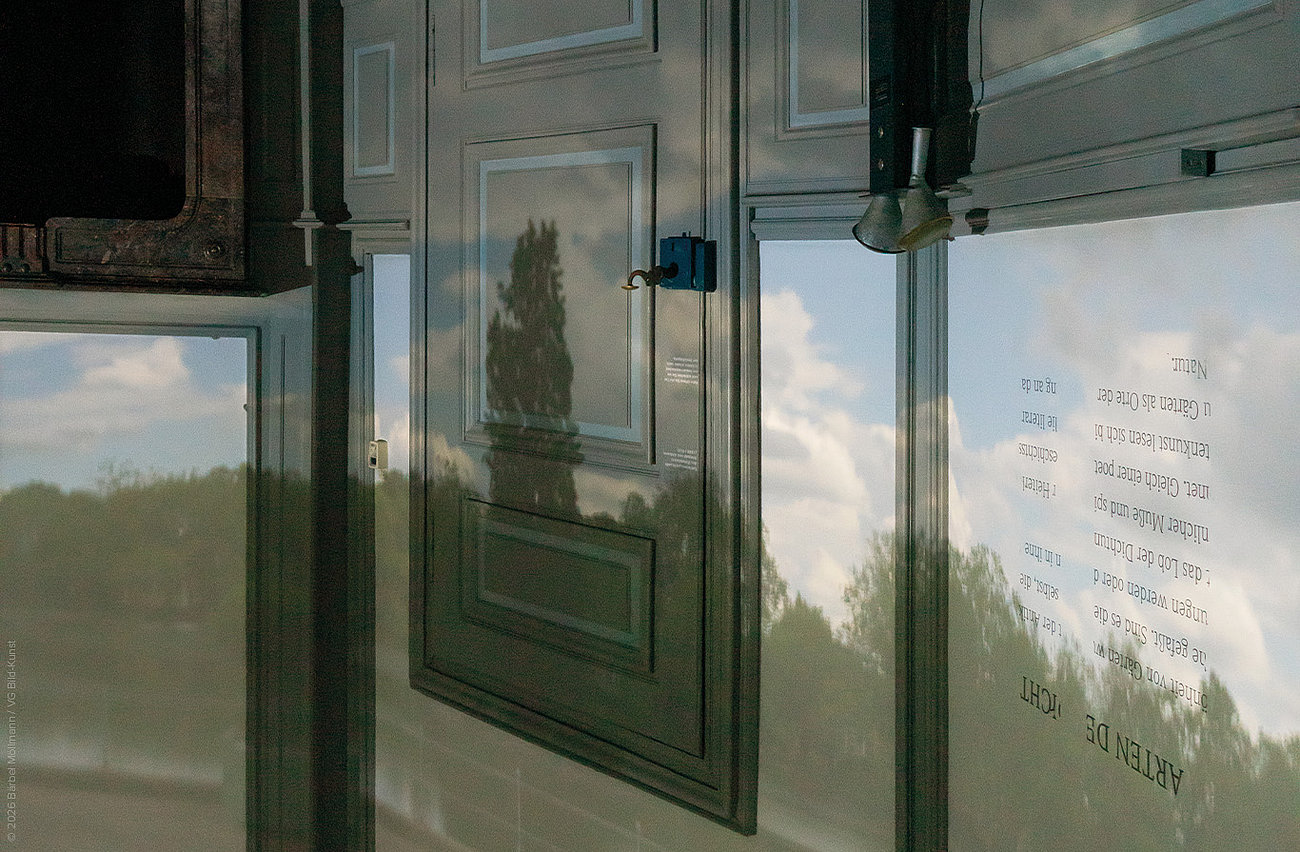
Duration: November 14, 2026, through December 20, 2027.
The opening reception will take place on November 13, 2026, at 7:00 p.m. at the Museum of Garden Art (in the East Wing). Admission is free.
The exhibition takes the camera obscura as its starting point to explore images and how they are created. The focus is on the artistic work of Bärbel Möllmann and the unique experience of entering the dark image space of the camera obscura.
Möllmann brings together three forms of image creation: the image produced by the light of a specific location in the camera obscura, the photographic image that captures a fleeting moment, and the images generated by generative AI from language and data. The exhibition juxtaposes these processes rather than presenting them as a linear progression from an older to a newer technology.
Benrath Palace is more than just the venue for the exhibition. Its architecture, windows, garden, and historic sightlines shape the view and connect interior and exterior spaces. Möllmann engages with these conditions, transforming the palace into a location, a motif, and an integral part of the image-making process.
The exhibition focuses on the creation, perception, and credibility of images. It explores how light, space, time, language, and technical systems influence what becomes visible, how images shape our conception of reality, and what underpins our trust in them.
The exhibition is curated by Narges Mehrnegar and Faten Alzahr. It was developed with the support and guidance of Prof. Dr. Stefan Schweizer.